
The story
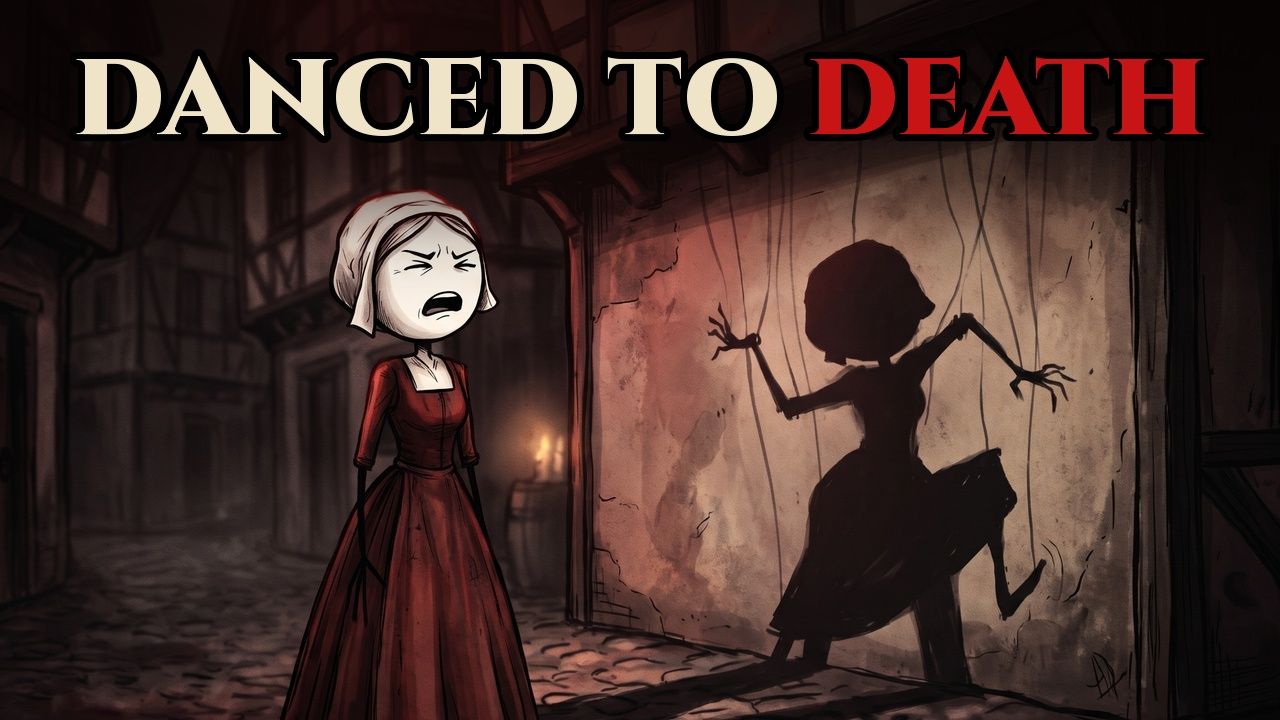
In July 1518, a woman stepped into a narrow street in Strasbourg and began to dance. There was no music and no festival. She did not stop that hour, or that night, or for days. Later accounts name her as Frau Troffea. Strasbourg was then a free city of the Holy Roman Empire; today it is in France.
Neighbours gathered to watch. Some laughed, some crossed themselves, and her husband is said to have begged her to stop. She danced until her feet bled through her shoes, collapsed, slept, and rose to dance again.
The dancing spreads
What is better documented is what came next. Within about a week, more than 30 people had joined her: men and women, strangers to one another, jerking and spinning in the streets with glazed eyes. By August the numbers had grown dramatically. Some chronicles say 400; others suggest far fewer. The city council's own records confirm that the authorities were frightened enough to act.
The cure: more dancing
The council called in the physicians. They ruled out astrology and the supernatural and declared a natural illness: "hot blood". The cure, they reasoned, was to let the dancers sweat it out.
So Strasbourg cleared guild halls for the dancers, built a wooden stage in the horse market, hired pipers and drummers to keep the rhythm going, and paid strong men to hold people upright when their legs gave way. It did not work. The music drew crowds, the crowds drew more dancers, and the cure began to look exactly like the disease.
Then came the deaths… or did they?
Later accounts claim that at the height of the plague as many as 15 people a day were dying of heart attacks, strokes and exhaustion. The detail is repeated everywhere, but it does not appear in the contemporary records that survive.
The curse of Saint Vitus
The council reversed course, and fast. Public music and dancing were banned, along with gambling and prostitution for good measure. By now the people of Strasbourg had a new theory: this was a curse, sent by Saint Vitus, a martyr long linked with frenzied dancing in the popular imagination.
The dancers were loaded onto wagons and taken to his shrine in the hills near Saverne. Priests gave them small crosses and red shoes anointed with holy oil, and led them in procession around the altar. By early September the plague seems to have burned itself out. Whether it was the shrine, the rest or simply time, nobody can say.
So what happened?
One popular theory is ergot, a fungus on damp rye that can cause hallucinations and convulsions. Most historians reject it: ergot poisoning restricts blood flow and causes violent spasms, not days of something like coordinated dancing.
The more widely accepted explanation, argued by the historian John Waller, is mass psychogenic illness: a sickness of the mind, spreading through fear and belief. Strasbourg had plenty to fear. The years before 1518 brought harsh winters, failed harvests, famine, smallpox, leprosy and a terrifying new disease, syphilis. Its people were starving and steeped in a faith that said saints could curse the wicked with uncontrollable dancing. Once one person fell into a trance, others primed by the same terrors followed, and every drumbeat the council paid for fed the fire.
Strasbourg was not alone. Outbreaks of compulsive dancing were recorded along the Rhine and in the Low Countries in the 1400s and earlier, most famously in 1374. But 1518 remains the best documented of them all.
So remember Frau Troffea, alone in that narrow street: a woman who began to dance when no one was playing, in a city that tried to cure her with music, then with prayer, then with red shoes.
Sources & further reading
John Waller, A Time to Dance, a Time to Die: The Extraordinary Story of the Dancing Plague of 1518 (Icon Books, 2008).
Strasbourg council records and contemporary chronicles, as discussed by Waller.

The School That Couldn't Stop Laughing (1962)